Every research question has a matching method. Draw the one that fits your stage, your time, and the kind of evidence you need—then run it like a recipe
If you’ve ever stared at a blank page thinking “Should this be interviews… or a survey… or usability testing… or…?” — you’re not alone. Most teams don’t get stuck because they don’t care about research. They get stuck because there are too many options, too little time, and everyone has a different favourite method.
That’s exactly why we built the SprintDecks Method Picker.
It’s a quick tool that asks a handful of questions and deals you a best-fit method for this week — like drawing a card, but for research. You tell it what you need to learn, and it tells you the fastest way to get a useful answer.
The picker is built around one idea: your question decides the method.
Instead of starting with “what do we feel like doing?”, it starts with:
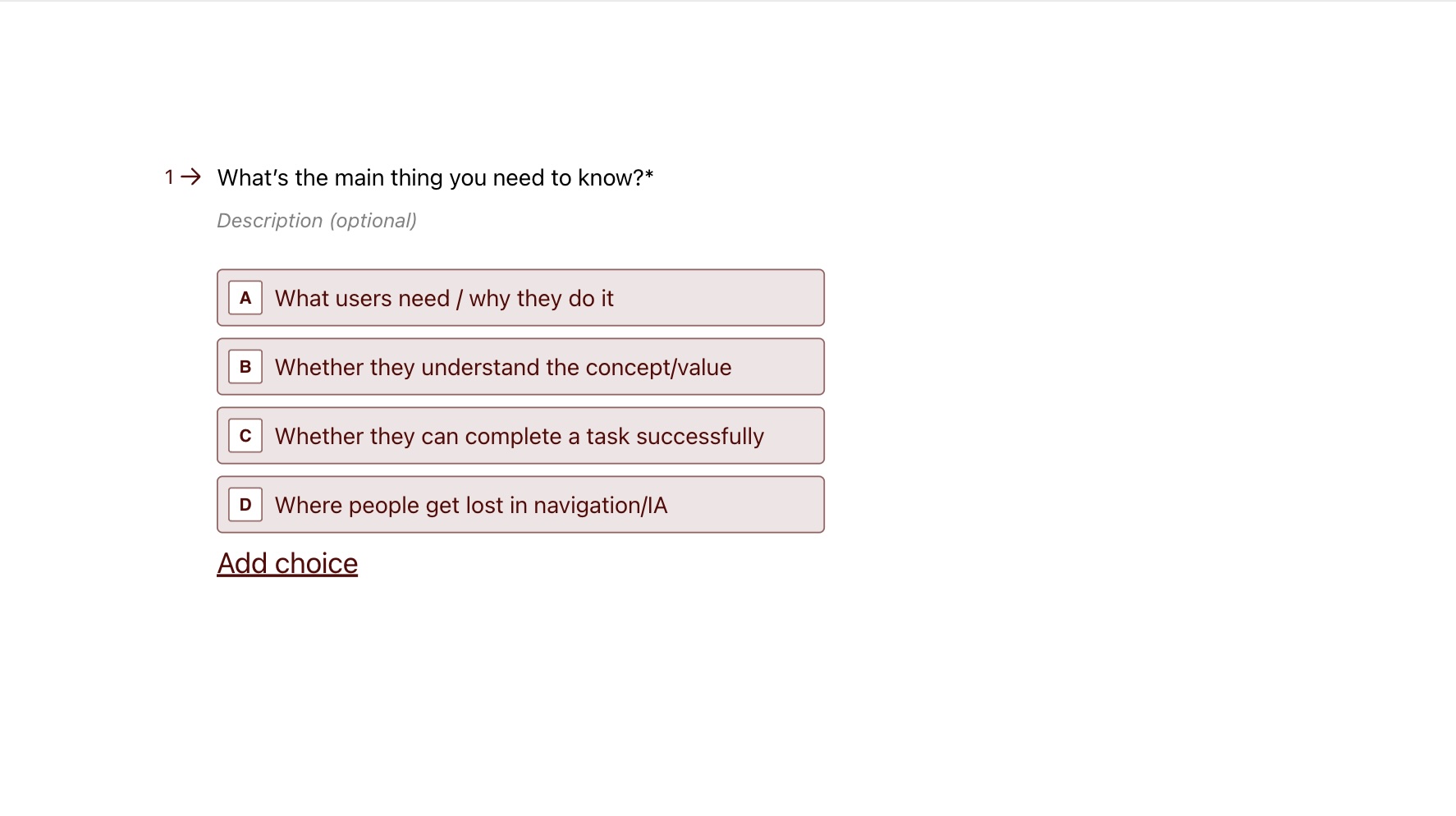
1. What do you need to know this week?
2. Are you testing a concept, a prototype, or a live product?
3.Is this about navigation and structure?
4. Do you need a story, or do you need a number?
5.Is this a quick sprint, or something that needs time to unfold?
Based on your answers, you’ll land on one of the core base methods SprintDecks is designed to support like discovery interviews, concept testing or surveys
Here’s the important bit: the output isn’t meant to be a rigid instruction. It’s a starting point.
The method you get is a base method — the simplest, most reliable option for your situation. From there, you can experiment:
Add a quick survey question at the end of interviews if you need a tiny bit of quant
Run a scrappy concept test first, then follow up with usability tasks once you have a prototype
Start with tree testing to find the broken labels, then do a mini card sort to explore alternatives
The picker isn’t saying “only do this forever.” It’s saying: this is the most sensible first move given your goal and your constraints.
Method debates can drag on for days — and ironically that’s the moment research starts feeling “too slow.” The picker removes the debate and gives you a clean next step. That means:
1. less decision paralysis
2. Faster planning
3. Easier alignment with stakeholders
4. And a method you can actually run in a week
Once you’ve used it a few times, you’ll also start learning why each method fits certain questions. The tool helps you build that intuition without needing to memorise a whole research textbook.
If you’re working in sprints, make method picking part of your Monday routine. Run the picker, commit to the method, and treat it like a recipe: gather your ingredients, run the sessions, and by Friday you’ve got learning you can act on.
Because the best research method isn’t the fanciest one.
It’s the one you’ll actually do.
Let's talk sample size. Now you have an idea of the methods and success, we need to figure out how many people we need to give you confidence in your product success.