The best way for you to get research when you need it, is to have a panel bursting full of beautiful humans to call upon when you need them. Having your own panel doesn't need to be complex or cost a fortune. But it needs to have some basics.
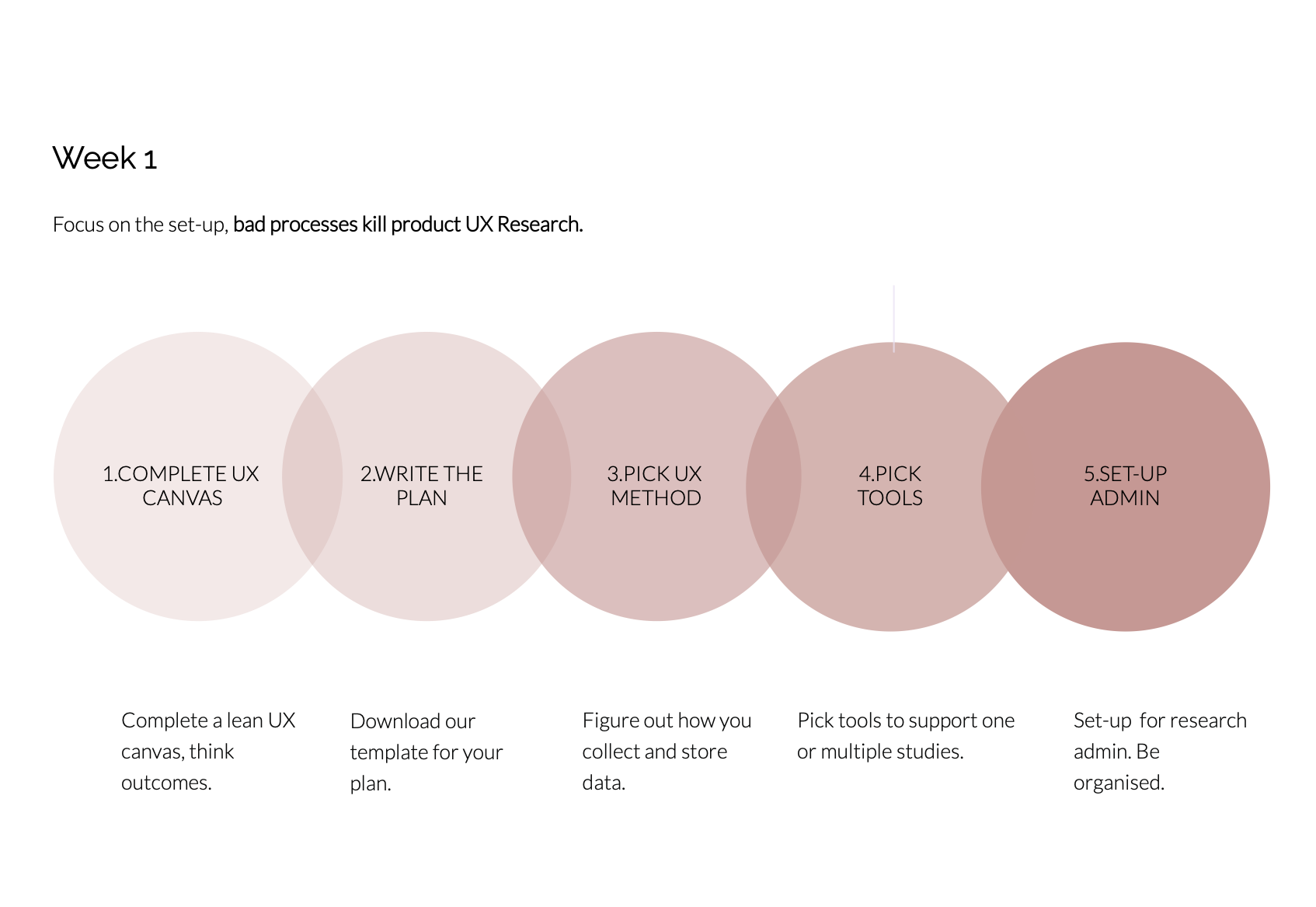
Complete a Lean UX Canvas to clarify the problem, success measures, and what you need to learn first.
Reveal typical experiences the customers have over time when interacting with your brand.
Use it to update your assumptions, align on what success and choose the next smallest research or product.

A Lean UX Canvas helps you turn fuzzy ideas into a shared, testable plan by making assumptions visible.
Turn your canvas into a practical research plan: questions, methods, timeline, and what “done” looks like.
This card is your crystal ball for the sprint, turning murky assumptions into a clear vision in just five days.
The HEART Framework is a simple way to measure user experience without drowning in vanity metrics.
Choosing the right sample size is a balancing act of speed v.s risk the minimum you can get away with.

A strong hypothesis is the compass — one test at a time, you’ll learn what to keep and what to leave behind.
Choose the right method(s) for the question you’re trying to answer over the course of the research.
You tell it what you need to learn, and it tells you the fastest way to get a useful answer.
The focus of this review isn't actually about asking the perfect question. It’s about getting the perfect scale.
The best way for you to get research when you need it, is to have a panel bursting full of beautiful humans.
Select the tools to recruit, schedule, record, and store insights (simple and cheap is fine).
Take your top competitors and map out their journeys, find feedback and identity some issues they have.
Admin can be super streamlined if we set it up right in the first place and thats what this is all about.
Create the templates and processes that stop messy research : consent, info sheets, tracking, and comms.
Consent forms don’t to be full of legal jargon and scare the living daylights out of your users.

You want to tell someone all the information about the study so they can make a decision to take part in it or not.
These profiles are built for one purpose only. To write a recruitment survey. It's about building a picture so you can write a screener.
templates can easily be adapted to send messages across your social media platforms. Use the tools your users do.